
Case Studies


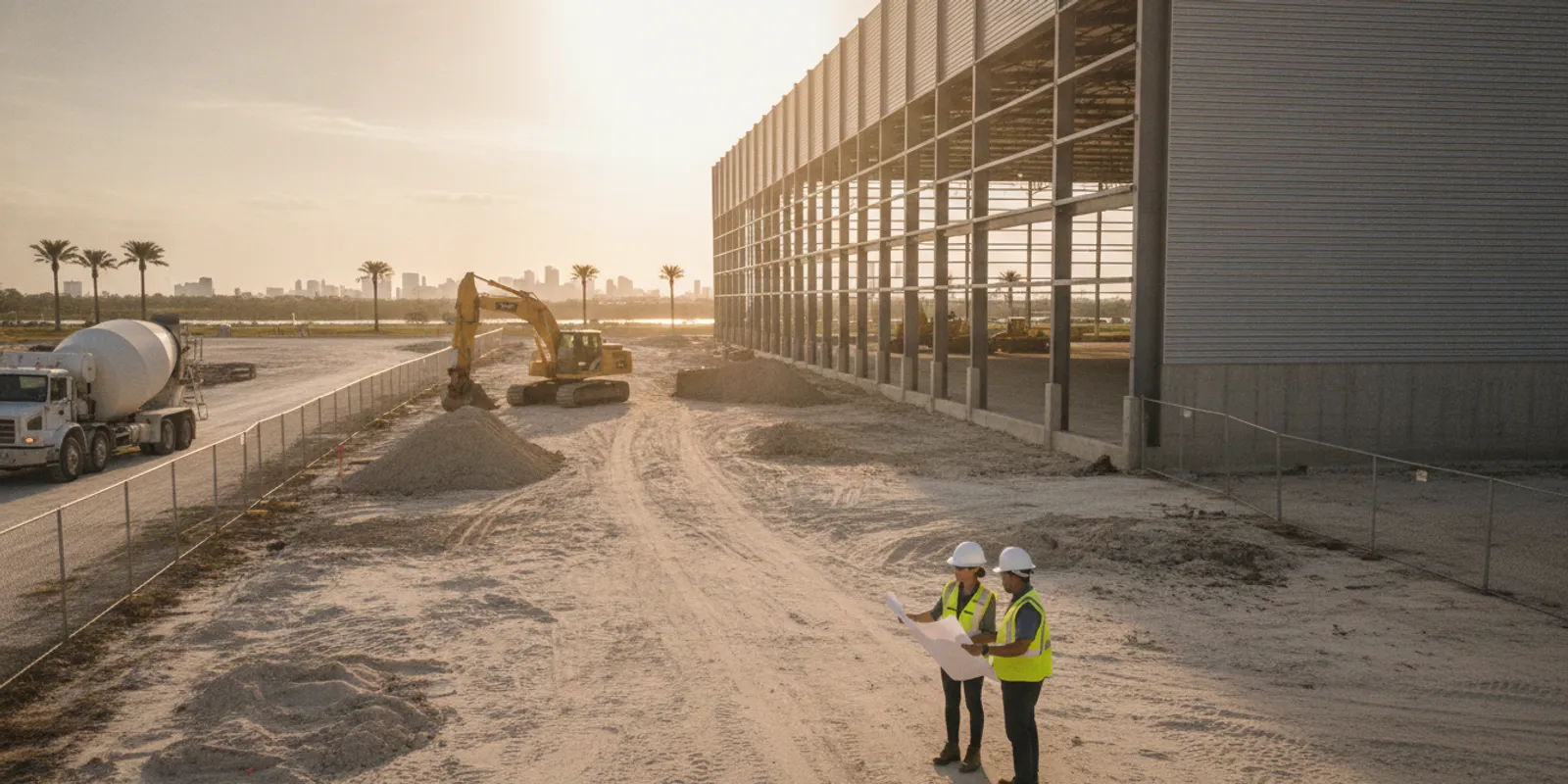
Industrial construction projects Tampa teams can pursue often become visible in pieces, well before a formal bid invitation. A land transaction, zoning action, site plan, permit filing, or tenant announcement may reveal a developing opportunity—but each signal needs context. The goal is to connect those clues, confirm the project’s stage, and build a useful relationship before the procurement process is underway.
Talk with Mercator.ai about early project intelligence
Industrial development is not a single event on a public calendar. A project can move through site selection, land control, due diligence, zoning review, design, permitting, financing, tenant decisions, contractor selection, and construction. Different records and announcements may appear at different points, and some private activity may not be readily visible in one central source.
That creates two common problems for business development teams. First, a search for projects already requesting bids can miss the period when an owner is still evaluating the site, delivery approach, or project team. Second, an isolated record can look more certain than it is. A rezoning application is not proof that a building will be constructed, and a permit does not by itself confirm who will award the work or when.
Early discovery is therefore a process of monitoring and qualification, not a promise that every lead will become a project. Teams need to separate evidence from assumptions, keep a record of what changed, and decide what next step would add value to a relationship.
Start with a set of signals that can be checked and compared over time. In Tampa and surrounding areas, local records and stakeholder conversations may offer different pieces of the picture. Availability, naming, and level of detail can vary by jurisdiction, so verify each record with its issuing office before treating it as definitive.

Build a basic parcel-and-participant record before reaching out. A simple spreadsheet or CRM entry can be enough if it captures consistent fields and preserves the source of each fact.
This method helps a team avoid treating a parcel, entity, or application as a complete opportunity. It also makes handoffs easier: another team member can see what is documented and what still needs confirmation.
Site documents are most useful when read as a sequence. A filing may indicate intent, while a later revision may show that access, building placement, utilities, or other design elements are still changing. Compare document dates, status labels, and review comments. If a plan is preliminary or under review, say so plainly in the opportunity record.
Permitting also requires careful interpretation. Identify the scope covered by a filing and avoid assuming it represents the entire project. Separate site work, utilities, shell construction, tenant improvements, and other scopes when records make those distinctions. A permit application is not the same as an issued permit, and an issued permit does not guarantee that a particular contractor has been selected.
When a record is unclear, contact the responsible public office or use the record’s own status and definitions. Keep a link or reference to the source, the retrieval date, and a brief note explaining your interpretation. That small discipline limits stale or misread information from driving outreach.
Use a consistent stage framework so sales, estimating, and leadership are not using “early” to mean different things. The stages below are a practical working model, not a claim that every industrial project follows the same path.
| Working stage | Signals to check | Useful qualification question | Appropriate next step |
|---|---|---|---|
| Site exploration | Land activity, preliminary ownership research, early public statements | Is there evidence of site control or only interest? | Monitor the parcel and map likely stakeholders; avoid presenting the concept as confirmed. |
| Entitlement and planning | Zoning actions, hearings, site plans, review comments | What use is proposed, and what decisions remain open? | Track milestones and identify a relevant, informed introduction. |
| Design and permitting | Plan revisions, permit applications, utility or site-work filings | Which scopes are advancing, and what is still under review? | Research project participants and prepare a specific conversation about capabilities. |
| Procurement preparation | More defined scope, stakeholder activity, contractor or delivery-model discussions | Who influences selection, and when could procurement begin? | Build the relationship and ask how to stay informed about the appropriate next step. |
| Bid or active construction | Formal invitation, award notice, issued construction permits, visible work | Is the opportunity still open, and does the team fit the scope? | Respond through the stated process and coordinate pursuit decisions internally. |
For each opportunity, score confidence separately from fit. Confidence describes the strength and recency of evidence. Fit reflects whether the scope, geography, delivery model, schedule, and relationship make sense for your firm. A project can be a strong fit but poorly verified, or well documented but outside your capabilities. Keeping those judgments separate makes prioritization more honest.
Not every announcement deserves an immediate sales call. Add context before outreach: Does the signal identify a specific Tampa-area site? Is it a confirmed commitment, an expression of interest, or general corporate news? Does the source name the developer, tenant, owner, or project team? Is there a likely construction scope your company can serve?
Then map stakeholders by role, not only by company. Depending on the project, relevant participants may include an owner or developer, tenant, architect, civil engineer, land-use consultant, broker, general contractor, or trade partner. Do not assume that a person named in one public filing controls construction procurement. Use verified relationships and ask for a suitable introduction where appropriate.
A good early message is short and tied to the evidence. For example: “I saw the site-plan review for the property on [street]. We support [relevant scope] on industrial work. Is there a useful time to learn how your team is approaching the project?” The bracketed details should be filled only with verified facts and a real capability. Avoid implying insider knowledge or certainty that the public record does not provide.
Signals lose value when the team cannot tell what was observed, when it was observed, or how a conclusion was reached. Give each site a single record, then update it as new filings and conversations arrive. The objective is not to create paperwork for its own sake. It is to make the next decision traceable and prevent an old note from being repeated as a current fact.
Review a sample of active records during a recurring team meeting. Ask whether the evidence still supports the stage, whether the source is current, and whether the next action is proportionate to what is known. If two people would describe the same project differently, refine the stage definitions or record format. A consistent, transparent pipeline is more useful than a large list with unclear confidence.
A repeatable workflow turns scattered observations into decisions. Keep it light enough that the team will use it, but structured enough to prevent duplicate research and unsupported claims.
Construction intelligence tools can make monitoring and relationship mapping more manageable when teams follow many opportunities. Mercator.ai describes its platform as focused on early project intelligence and Texas markets. Its locations information is a sensible place to check geographic scope; Tampa-area readers should not assume local coverage is available. Teams can also review the Texas coverage overview to understand the documented core geography.
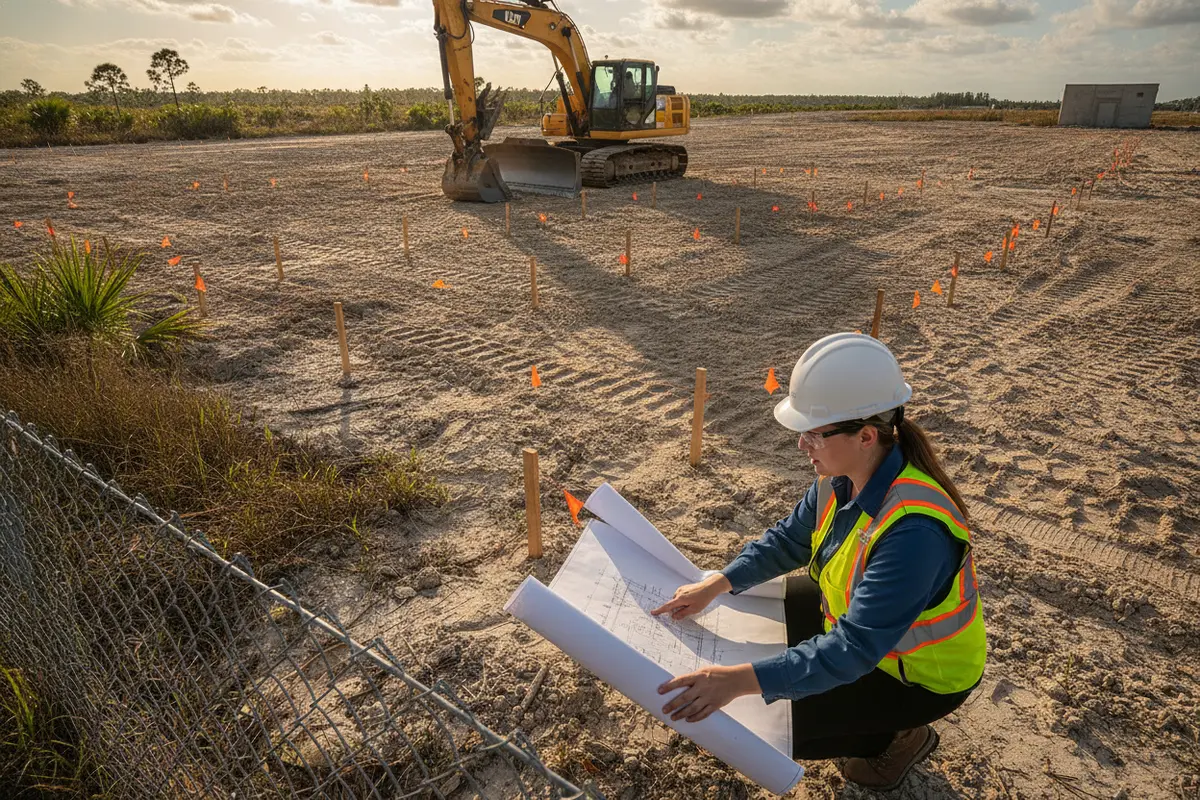
The objective is not to contact every name as soon as it appears in a database. It is to arrive prepared, relevant, and early enough to learn how a project is taking shape. A useful conversation can clarify priorities, timing, procurement preferences, and who should be involved next.
Before contacting anyone, prepare a short brief: what is known, where it came from, what stage seems plausible, what remains uncertain, and why your team may be relevant. Make the first interaction about learning and offering a useful perspective, not demanding a bid package. Follow the prospect’s preferred channel and cadence. If the project is not active or your firm is not a fit, record that outcome and revisit only when a meaningful new signal appears.
Teams evaluating technology can compare workflow fit, geographic coverage, source transparency, alert controls, and how easily information can be shared across business development and preconstruction. Mercator.ai offers information about its plans and pricing, and its construction intelligence articles provide further context. Product capabilities and availability should be confirmed directly, especially for teams pursuing opportunities outside the company’s documented Texas focus.
Request a Mercator.ai demo and discuss your project workflow
No single record should be treated as a guarantee. Land transactions, zoning applications, plans, permits, and announcements each show a different piece of activity. Verify status, date, and scope, then look for corroborating evidence before calling an opportunity confirmed.
Not necessarily. Earlier outreach may be useful when there is a credible signal and a relevant reason to connect. The message should acknowledge what is known, avoid treating a proposal as final, and focus on learning whether a conversation makes sense.
Separate confidence from fit, look for independent signals, record unresolved questions, and define a threshold for follow-up. Pause or deprioritize a site when the evidence is old, contradictory, or unsupported by meaningful project movement.
Mercator.ai’s documented core coverage is focused on Texas. Tampa teams should not infer that local project coverage is available; contact the company to discuss current capabilities and whether the platform fits a specific workflow.
Industrial opportunity discovery works best when teams connect early signals with careful verification and thoughtful follow-up. A disciplined process helps Tampa-area construction professionals focus on credible projects and build relationships before procurement becomes a rush.