
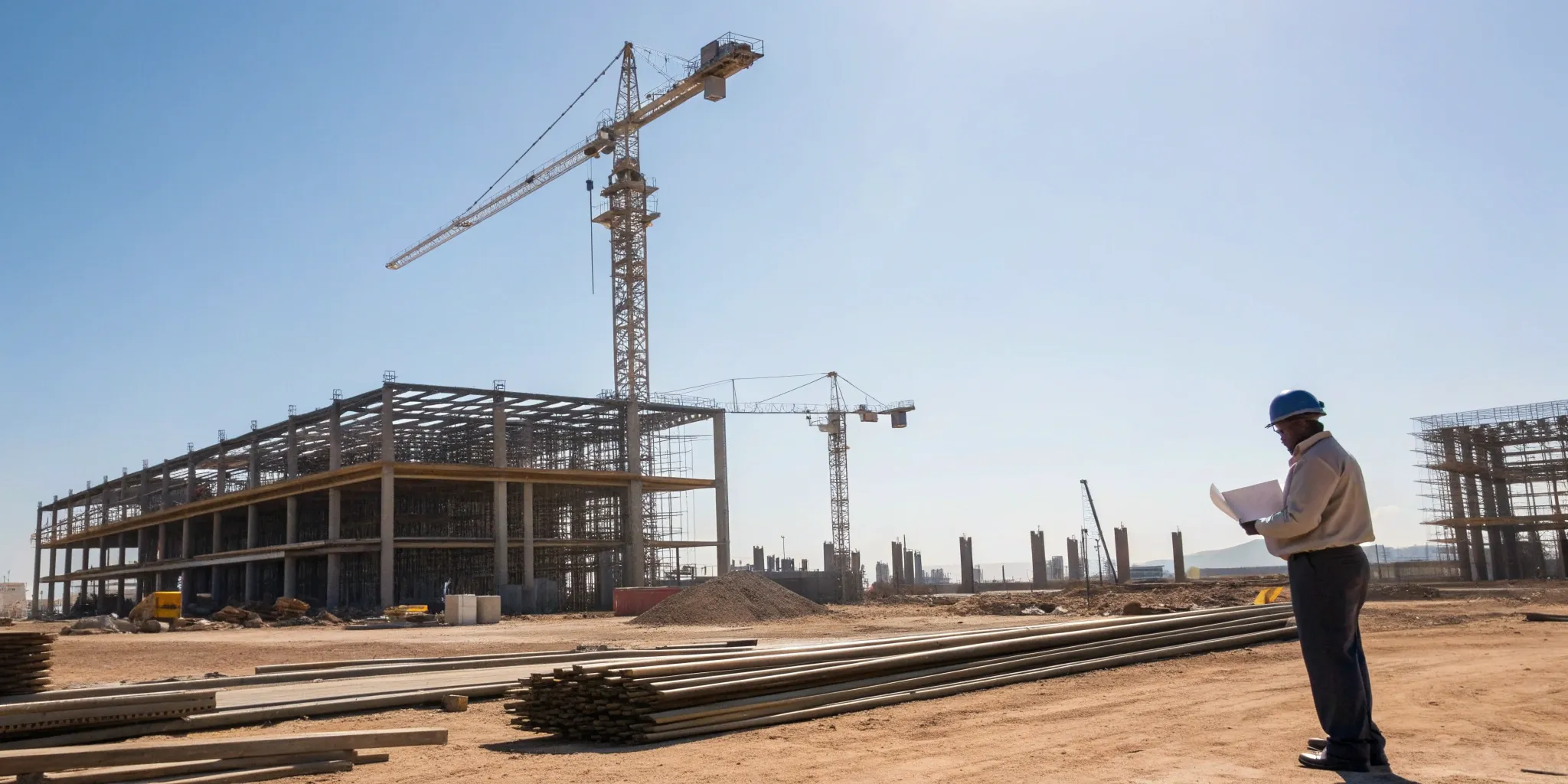

The explosive growth of AI is fueling a construction boom right here in Texas. Forget office towers—the new megaproject is the hyperscale data center. With a record number of data center permits issued by TX in 2025, these facilities are being built at a staggering pace, creating a deep well of opportunity for the entire construction industry. But who are the key players? This guide breaks down the hyperscale data center construction pipeline 2025. We'll cover the companies, locations, and trends shaping the future of data center projects in Texas, giving you the intelligence needed to get specified early and win more work.
Key Takeaways
- This is a Long-Term Opportunity: The Texas data center boom is a sustained construction cycle, not a short-term trend, offering a reliable pipeline of high-value projects for firms planning for future growth.
- Focus on the Four Key Hubs: The majority of new builds are concentrated in Dallas-Fort Worth, Austin, Houston, and San Antonio. Target your business development efforts in these regions to find the most promising projects.
- Early Insight is Your Best Strategy: These projects move fast and have complex needs. Identifying opportunities early gives you the time to plan for aggressive timelines, secure skilled labor, and prepare for specialized demands like advanced cooling and power systems.
What's Driving the Texas Data Center Construction Boom?
If you’re in the construction business in Texas, you’ve likely noticed a new kind of project dominating the landscape. Massive, windowless buildings are popping up across the state, backed by billions in investment from the world’s biggest tech companies. This is the Texas data center boom, and it’s creating a huge pipeline of work for general contractors, subcontractors, and suppliers. The demand is driven by our ever-growing need for data, from cloud computing and streaming services to the explosive growth of artificial intelligence.
Unlike other construction sectors that might see ebbs and flows, the demand for data centers is on a steady upward trajectory. These aren't just warehouses for servers; they are highly complex, mission-critical facilities that require specialized skills and a massive amount of resources to build. For construction professionals, this translates into long-term, high-value projects. The key is understanding the scale of this growth and where the next wave of investment is headed, so you can position your business to win these opportunities before they hit the open market.
The Numbers Behind the Boom
Let's put this boom into perspective. Texas is already a major player, ranking as the second-largest data center market in the United States. But the growth is just getting started. Right now, at least 10 new data centers are under construction, with some projects rivaling the size of small towns.
The official numbers from the Texas Comptroller's office paint an even clearer picture of the activity. The state currently lists 53 "Registered Qualifying Data Centers" and another 40 "Registered Qualifying Large Data Center Projects." Each of these registrations represents a significant construction opportunity, from initial site work and concrete pours to complex electrical and mechanical installations. This isn't a temporary trend; it's a fundamental shift creating a deep well of projects for years to come.
How Data Centers Impact the Texas Economy
This surge in data center construction is a massive win for the Texas building industry, especially as other sectors face economic uncertainty. While residential or commercial projects might slow down, data centers are proving to be a bright star in Texas construction, providing stability and a steady stream of high-value work.
Tech giants like OpenAI, SoftBank, and Oracle are pouring billions into the state, creating a ripple effect that benefits everyone from large general contractors to specialized subcontractors and local suppliers. These projects require immense amounts of materials, equipment, and skilled labor, injecting significant capital directly into local economies and creating thousands of construction jobs across the state. It’s a clear signal that Texas is the place to be for builders looking to capitalize on the digital economy.
What's on the Horizon for Investment?
The current pipeline is impressive, but the future investments are staggering. A great example is the "Stargate" project, a massive initiative backed by major tech players. This single project plans to invest up to $500 billion to build out new AI infrastructure, with a goal of creating 100,000 jobs. The scale is almost hard to comprehend.
To power these facilities, the Stargate project alone is planning for nearly 7 gigawatts of capacity. For context, one gigawatt is enough to power hundreds of thousands of homes. This level of investment signals a long-term commitment to building in Texas, ensuring a robust project pipeline for the foreseeable future. For construction firms, this isn't just about finding the next job; it's about building relationships and securing a place in a thriving, decade-long building cycle.
Projected Financing Needs for 2025
The money is ready and waiting. According to a 2025 Global Data Center Outlook from JLL, next year is set to be a record-breaker for financing new data center builds, with an estimated $170 billion in projects needing funding. This isn't just speculative capital; it's a massive pool of money earmarked for construction. For general contractors and subcontractors, this means the projects you're hearing about have the financial backing to move from blueprint to reality. The challenge isn't whether the projects will happen, but identifying them early enough to get your foot in the door before your competition does.
Current Market Dynamics for Sales and Acquisitions
You might think tech companies would simply buy existing facilities to expand, but the market says otherwise. High interest rates and disagreements over pricing are making it difficult to close deals on existing data centers. This "build vs. buy" dilemma is a huge advantage for the construction industry. Since acquiring operational facilities is less attractive, major players are choosing to build new ones from the ground up. This dynamic is a primary engine for the new construction boom, ensuring a steady stream of ground-up projects that require the full spectrum of construction services, from site development to final commissioning.
Notable Recent Investments
The scale of investment in Texas is almost hard to fathom, but a few recent announcements paint a clear picture. OpenAI's CEO, Sam Altman, has discussed plans to spend trillions on AI infrastructure, signaling a long-term vision that will require immense physical construction. More concretely, Vantage Data Centers announced an investment of over $25 billion for a new 1.4 GW campus on a 1,200-acre site in Texas. These aren't just headlines; they are tangible, massive-scale projects breaking ground in our backyard, representing a generational opportunity for construction firms that are prepared to meet the demand.
Putting Texas in Context: The National and Global Data Center Surge
While the boom feels immediate here in Texas, it’s part of a much larger story unfolding across the country and the globe. Understanding this broader context helps clarify just how significant and long-lasting this opportunity is. The demand for data isn't a regional trend; it's a worldwide shift, and Texas is simply one of the most critical fronts in this new wave of construction. For firms looking to build a long-term strategy, seeing the national and global picture confirms that investing your resources into this sector is a smart, sustainable move. The numbers show a clear and powerful trajectory that points to a deep pipeline of work for years to come.
U.S. Market Statistics and Spending
The scale of data center construction across the United States is truly unprecedented. To give you an idea, spending on data center construction reached a new record of $14 billion in a single month, completely shattering the previous monthly record. This wasn't just a small jump; it was double the prior peak. This level of investment shows that the demand for digital infrastructure is creating a supercharged market for construction firms with the right expertise. It confirms that the projects you're seeing in Texas are part of a massive, nationwide capital deployment, offering a stable and high-value alternative to more volatile construction sectors.
Top States for Data Center Investment
So, where does Texas fit into this national picture? Right at the top. Texas already holds the title as the second-largest data center market in the country, making it a primary hub for new development. When you look at where the money is going, the numbers are even more telling. The state saw $7.1 billion in spending, placing it among the top three states for data center investment alongside Louisiana and Virginia. This concentration of capital means that if you're a contractor or supplier in Texas, you are geographically positioned in one of the most active and well-funded markets in the entire country.
Global Construction and Energy Projections
Looking beyond the U.S., the global outlook is just as explosive. The data center sector is growing at a phenomenal pace worldwide, with about $170 billion worth of projects needing financing. This growth is fueled by a global hunger for data that is projected to double the energy demand from data centers within the next five years. For the construction industry, this signals a long-term, global building cycle. The projects breaking ground in Texas are part of a foundational shift in how the world operates, ensuring that the demand for skilled builders and suppliers won't be drying up anytime soon.
Why Are Tech Giants Flocking to Texas?
It’s no accident that tech giants are setting up shop in the Lone Star State. The decision to build massive, multi-million dollar data centers here is a strategic one, driven by a powerful combination of financial incentives, logistical advantages, and a ready-to-work labor pool. For general contractors and suppliers, understanding these drivers is key to anticipating where the next big projects will land. Let's break down exactly what makes Texas so attractive.
Tapping into Texas's Energy Advantage
Data centers are power hogs, running 24/7 and consuming enormous amounts of electricity to keep servers cool and operational. This makes energy one of their biggest operating expenses. Texas offers a significant advantage with some of the most competitive energy costs in the nation—in some cases, electricity prices are a fraction of what companies would pay in states like California. This isn't just a minor saving; for a large-scale data center, it translates into millions of dollars back on the bottom line each year. This financial reality is a primary reason why Texas has become a top-tier destination for data infrastructure investment.
Why Texas's Business-Friendly Policies Attract Tech
Beyond just low costs, Texas has cultivated a famously business-friendly environment. The state actively encourages development with fewer regulatory hurdles and supportive programs, including grants for new businesses. For construction professionals, this means projects can often get off the ground faster and with less red tape. Local energy companies are also known for being cooperative and ready to work with large-scale users to meet their needs. This pro-growth attitude, combined with solid existing infrastructure, creates a stable and predictable environment where companies feel confident investing in long-term, complex construction projects.
The Strategic Advantage of a Central Location
Geography plays a huge role in the digital world. Being located in the middle of the United States gives Texas data centers a strategic edge. This central position helps minimize latency—the delay in data transfer—providing faster and more reliable connections to users on both coasts. For companies that serve a nationwide customer base, this is a critical operational advantage. It ensures that services run smoothly whether you're in New York or Los Angeles. This logistical benefit makes Texas an ideal hub for the country's growing digital infrastructure.
Connecting with a Skilled Tech Workforce
You can't build a data center without skilled people, and Texas has them in spades. The state boasts a large and growing pool of talent, including the electricians, engineers, and construction crews essential for getting these complex facilities built. This availability of a skilled local workforce means companies don't have to spend a fortune recruiting talent from out of state. For contractors and subcontractors, it signals a healthy and sustainable market. The presence of this talent pipeline gives tech companies the confidence that they can not only build their facilities but also staff and maintain them for years to come.
Mapping the Hyperscale Construction Pipeline
The data center projects breaking ground across Texas are not just big; they're monumental. We're talking about sprawling campuses that redefine the scale of modern construction and create a massive pipeline of work for general contractors, subcontractors, and suppliers. These aren't just single buildings but entire ecosystems of infrastructure, from the core data halls to the substations and cooling systems required to power them. For firms looking to secure high-value contracts, understanding the scope of these major projects is the first step toward getting a piece of the action.
The sheer volume of development means opportunities are everywhere, but they’re also highly competitive. Getting ahead requires knowing which projects are moving from planning to reality and who the key players are. This boom touches every part of the construction industry, demanding expertise in civil engineering, structural steel, advanced mechanical and electrical systems, and highly specialized trades. The long-term nature of these multi-phase builds offers a chance to establish lasting partnerships, but only for those who can get in on the ground floor. With dozens of facilities in various stages of development, staying informed is crucial for positioning your business to win.
What's Being Built Right Now?
Texas is in a heated race to become the nation's data center capital, and the project pipeline reflects that ambition. We're seeing more than 10 hyperscale campuses announced, with dozens more in the planning stages. These aren't your standard commercial builds; they are community-altering developments. Projects like the massive Stargate campus and the conceptual Data City are setting a new standard for what a data center can be, promising to transform the regions where they are built. For construction professionals, this translates to a long-term stream of complex, high-specification work that demands expertise in everything from concrete to cooling systems.
How Much is Being Invested?
The capital flowing into these projects is staggering. To put it in perspective, the Stargate project alone has nearly $400 billion in planned investments, with a goal of reaching $500 billion. This level of funding signals a long-term commitment from some of the world's largest tech companies. For contractors and suppliers, these aren't just one-off jobs. They represent a chance to build lasting relationships and secure a steady flow of work on multi-phase, multi-year builds. The investment goes beyond the data halls themselves, funding the entire supporting infrastructure, including roads, utilities, and power generation, creating a wide array of opportunities.
When Will These Projects Go Live?
The pace of these developments is relentless. Tech giants are moving quickly to get their facilities online to meet the explosive demand for data processing. While the first major Stargate data center is already operational in Abilene, Texas, the company is simultaneously building out other sites, with a new facility in Ohio expected to be ready next year. This rapid, multi-site approach shows that once a company commits, they move fast. For construction firms, this means the window of opportunity can be short. Having early visibility into new data center sites and permit applications is essential to getting involved before key decisions are made and contracts are awarded.
Can the Texas Grid Handle the Demand?
One of the biggest challenges—and opportunities—in this boom is power. AI data centers have power demands similar to steel mills, with incredibly fast and large energy ramps. This intense consumption is putting a strain on the Texas electric grid. In fact, the "disorganized integration" of these massive facilities is now considered a primary grid reliability risk in the state. For the construction industry, this challenge translates directly into work. It’s driving a parallel boom in energy infrastructure projects, including new power plants, substations, and transmission lines, creating a whole new category of essential projects for specialized contractors and suppliers.
Where's the Action? Texas's Top Data Center Hubs
While the data center boom is happening across Texas, the activity is concentrated in a few major metropolitan hubs. Each region has its own unique drivers, from established infrastructure to burgeoning tech scenes. For general contractors, subcontractors, and suppliers, knowing where to focus your efforts is the first step in winning your next project. Understanding the dynamics of these key markets will help you pinpoint the most promising opportunities and get ahead of the competition. Let's look at the four areas leading the charge.
Dallas-Fort Worth: The Original "Data Center Alley"
Dallas-Fort Worth is the undisputed heavyweight in the Texas data center market. As a central connectivity hub for the entire country, DFW offers robust fiber infrastructure and competitive power costs that are hard to beat. The region’s massive economy fuels constant demand, and as one industry report notes, "Data center space is in high demand, and land prices are going up." For construction professionals, this means a steady stream of large-scale projects from some of the biggest names in tech. The challenge? It's a competitive landscape, but the sheer volume of work makes it the most important data center market to watch.
Austin's Booming Tech Corridor
Fueled by its "Silicon Hills" reputation, Austin is a hotbed for data center development. The city's thriving tech ecosystem creates intense local demand for data processing and storage. With a data center vacancy rate hovering at a razor-thin 1.8%, the pressure to build new facilities is immense. This low supply and high demand create a perfect storm of opportunity for construction firms. Companies are actively seeking sites for new builds to support their growth in the region, making the Austin metro area a prime location for your next project lead. Keeping an eye on land sales and permit applications here is a smart move.
Houston: Where Energy Meets Data
Houston brings a unique flavor to the Texas data center scene. As the energy capital of the world, the city's industrial and tech sectors are increasingly intertwined, driving demand for specialized data infrastructure. What sets Houston apart is its focus on resilience. Data centers here are engineered to withstand extreme weather, including hurricanes, which means projects often have higher specifications for structural integrity and backup power. For contractors, this presents an opportunity to showcase expertise in building hardened, mission-critical facilities. The projects might be more complex, but they also come with a higher premium.
Why San Antonio is a Rising Star
Don't sleep on San Antonio. While it may not have the same volume as DFW, it’s quickly becoming a major data center destination. The city boasts a strong economy and shares the same low 1.8% vacancy rate as Austin, signaling a clear need for new construction. Major tech giants like Microsoft have already made significant investments, building massive campuses that have put San Antonio on the map. For construction firms, this market represents a chance to get in on the ground floor of a rapidly expanding hub, potentially with less competition than in more established markets.
Beyond Texas: A Glimpse at the Global Development Pipeline
While Texas is a clear epicenter of the data center boom, it’s important to remember this isn't happening in a vacuum. The same forces driving construction in Dallas and Austin—the explosive growth of AI and cloud computing—are fueling a worldwide building spree. Keeping an eye on these global trends isn't just interesting; it's smart business. What's happening in markets from Montana to Malaysia can give you a preview of the technologies, challenges, and project types that could be heading to Texas next. From innovative power solutions to new cooling technologies, the global pipeline offers a valuable look into the future of data center construction.
This worldwide demand reinforces the long-term stability of the data center market. The massive capital being deployed across continents shows that this isn't a fleeting trend but a fundamental shift in global infrastructure. For Texas-based firms, this means the pipeline of local projects is backed by a durable, global economic engine. Understanding this broader context helps you plan with more confidence, knowing you’re building for an industry that is expanding everywhere. Let's take a quick look at some of the major projects taking shape around the world.
Major Projects in North America
The demand for data centers is hitting record highs across North America, but this rapid growth is also exposing a critical bottleneck: the limitations of existing power grids. This challenge is forcing developers to get creative. For example, data center giant Equinix is exploring new nuclear power technology to meet its energy needs. Meanwhile, the scale of new projects continues to expand, with developments like Quantica Infrastructure's planned 5,000-acre data center campus in Montana. These projects show that the push for more data capacity is a continent-wide phenomenon, creating a parallel demand for innovative energy and infrastructure solutions that will likely influence future builds in Texas.
Expansion in Latin America
Latin America is quickly becoming a new frontier for hyperscale development. Tech giants are pouring billions into the region to build out the infrastructure needed to support growing digital economies. A prime example is Oracle's partnership to build a massive AI data center campus in Rio de Janeiro, with an ambitious goal of reaching 1.5 gigawatts of power by 2027. Elsewhere, companies like ODATA are steadily increasing their footprint, recently launching their fourth large data center in Mexico. This wave of investment to the south underscores the global nature of the tech expansion and highlights the immense opportunities for construction firms specializing in these complex builds.
Growth Across Europe
Across the Atlantic, Europe is experiencing its own data center construction surge. In Germany, Maincubes recently received approval to begin building a new campus near Berlin that aims to provide 400 megawatts of power. The United Kingdom is also seeing massive investment, with Blackstone and QTS moving forward on a planned $10 billion data center hub. These large-scale projects reflect the continent's urgent need to expand its digital infrastructure to keep pace with data demands. For construction professionals, the European market serves as another indicator of the sector's health and the sheer scale of capital being invested globally.
Key Developments in the Asia-Pacific Region
The Asia-Pacific region is a hotbed of both investment and innovation in data center construction. In Malaysia, STACK Infrastructure is investing $1.66 billion into a new large-scale facility, signaling the region's growing importance as a digital hub. Meanwhile, in Australia, CDC is planning to build the largest data center campus in Western Australia, a 200-megawatt project that will feature a special water-free cooling system. This focus on sustainability and resource management is a key trend to watch, as solutions pioneered in other water-conscious regions could soon become standard practice for projects in Texas and other parts of the U.S.
Who Are the Key Players Behind the Boom?
So, who’s actually building these massive facilities? The Texas data center boom isn’t being driven by just one or two companies; it’s a full-court press from the biggest names in technology and global investment. For general contractors, subcontractors, and suppliers, this means a wave of opportunities is coming from multiple directions. Understanding who is behind these projects is the first step to getting your foot in the door. These are the clients and partners you’ll want to build relationships with, and the sooner you can identify their plans, the better your chances of winning the work.
Who's Leading the Pack?
The list of companies setting up shop in Texas reads like a who's who of the tech world. Industry giants like Amazon, Google, Microsoft, Oracle, and Tesla already have a significant presence, operating data centers across the state. But the new wave of AI-focused development is bringing even more players to the table. A massive initiative, known as the Stargate project, involves major commitments from companies like OpenAI, SoftBank, and Oracle. These are the companies defining the next generation of technology, and they’ve chosen Texas as a critical hub for the infrastructure needed to power it.
A Look at Future Expansion Plans
The current pipeline of projects is staggering. Right now, at least 10 new data centers are under construction in Texas, with one planned facility reportedly set to be as large as New York’s Central Park. The scale is almost hard to comprehend. The Stargate initiative alone has announced five new data center locations and is aiming to build 10 gigawatts of power capacity by the end of 2025. This isn't a short-term trend; it's a long-term strategic expansion that will require years of construction work, making early project awareness essential for getting involved from the ground up.
Tracking Major Investment Commitments
The financial commitments behind these projects are just as impressive as their physical scale. The Stargate project is a prime example, with a planned investment of up to $500 billion for new AI infrastructure nationwide. A significant portion of that capital is earmarked for Texas, with an initial $100 billion from companies like OpenAI and Oracle. This venture isn't just about building facilities; it’s about creating an entire ecosystem, with projections of 100,000 new jobs. For local construction firms, this massive influx of capital translates directly into opportunities. As one successful general contractor found, getting early visibility into these well-funded projects is the key to securing contracts before they ever hit the open market.
Building Smarter: Innovations in Data Center Design
Building a data center is one thing; powering and cooling it is another challenge entirely. These facilities are incredibly resource-intensive, and as Texas builds more of them, the strain on local infrastructure grows. This isn't just a problem for utility companies—it's a massive opportunity for the construction industry.
The conversation has shifted from just building bigger to building smarter. Clients are demanding facilities that are not only powerful but also efficient and sustainable. This push for innovation is creating new project types and changing the specifications for everything from electrical systems to HVAC and plumbing. For general contractors, subcontractors, and suppliers, staying ahead of these trends is key to winning bids and building the next generation of Texas data centers. It means understanding the new technologies that reduce energy consumption, integrate renewable power, and conserve water. These aren't just "nice-to-haves" anymore; they are core requirements driving the design and construction of these critical facilities.
Innovative Solutions for Powering Data Centers
The sheer amount of electricity data centers consume puts a significant demand on the Texas power grid. As more facilities come online, ensuring grid stability is a top priority. According to research from HARC, the rapid growth of data centers calls for an integrated policy framework to support a sustainable digital economy in the state. For construction professionals, this translates into projects focused on grid modernization. We're talking about new substations, upgraded transmission lines, and the installation of smart grid technologies designed to manage these high-energy loads efficiently. It’s a critical piece of the puzzle, ensuring the lights—and the servers—stay on.
The Challenge of Power Infrastructure and Permitting
The biggest hurdle for new data centers isn't finding land; it's securing power. Getting enough electricity and building the necessary transmission lines has become a major bottleneck. According to a JLL global outlook, it can take four or more years just to get high-capacity power lines to a new site, largely due to lengthy permitting processes. This reality is fundamentally changing how sites are selected, with developers now prioritizing locations based on power availability rather than land cost. For construction firms, this creates a parallel boom in energy infrastructure projects. The demand for new substations, transmission lines, and grid upgrades is creating a steady stream of high-value work for specialized contractors and suppliers who can navigate these complex builds.
The Rise of Nuclear Power and SMRs
To overcome the limitations of the existing grid, data center developers are exploring new ways to generate power directly on-site. The most talked-about solution is nuclear energy, specifically Small Modular Reactors (SMRs). These are smaller, more flexible nuclear reactors that could provide the massive, reliable, and clean energy needed to run AI-focused data centers. While SMRs are still in the early stages of development and aren't expected to be deployed in the U.S. until around 2030, they represent the future of data center power. This shift toward on-site power generation is already creating opportunities for construction firms with expertise in building complex energy infrastructure, a trend that will only accelerate as these new technologies become commercially viable.
How Data Centers Are Using Renewable Energy
Texas has a major advantage when it comes to sustainable power: it boasts the "greenest" power grid in the nation. With abundant wind and solar power, the state is a magnet for tech giants looking to meet their corporate sustainability goals. This commitment to renewables is shaping construction demand. Data center projects increasingly include on-site or nearby renewable energy sources, such as dedicated solar farms or battery storage facilities. For contractors and suppliers, this opens up opportunities to specialize in renewable energy infrastructure, a sector that’s growing right alongside the data center market.
The Future of Data Center Cooling
Keeping thousands of servers from overheating is a massive energy expense, often accounting for up to 40% of a data center's electricity usage. Innovation in this area is critical. Right here in Texas, The University of Texas at Arlington is part of a DOE-backed program aiming to slash data center cooling energy to under 5%. This research is driving the adoption of advanced solutions like liquid cooling, more efficient air-handling units, and AI-driven climate management systems. For mechanical and HVAC contractors, this means the days of standard cooling systems are numbered. The future is in specialized, high-efficiency technology.
Meeting the Demands of High-Density AI Chips
The incredible power of AI comes at a cost: heat. The latest generation of AI chips, like those from NVIDIA, can consume up to 300% more power than older models, generating an immense thermal load that traditional air-cooling systems simply can't handle. This is forcing a rapid industry-wide shift toward liquid cooling, which is no longer a niche solution but a baseline requirement for new data center construction. According to the JLL Global Data Center Outlook 2025, liquid cooling is now a must-have for new builds and a critical upgrade for retrofits. For contractors and suppliers, this means mechanical and plumbing scopes are becoming far more complex, demanding new expertise in specialized piping, pumps, and heat exchange systems to support the next wave of AI infrastructure.
Exploring Immersion Cooling Technologies
For the most powerful computing systems, even advanced liquid cooling might not be enough. This is where immersion cooling enters the picture—a cutting-edge technique where server components are submerged directly in a non-conductive fluid. While it's still a few years from widespread adoption, it represents the next frontier in data center efficiency. This technology perfectly illustrates how the industry is shifting from simply building bigger to building smarter, with clients demanding facilities that are both powerful and sustainable. For construction firms, this trend highlights the importance of staying ahead of the curve. The mechanical and structural requirements for immersion cooling are highly specialized, making early collaboration with design teams more critical than ever to get specified on these forward-thinking projects.
Smarter Strategies for Water Conservation
Cooling systems don't just use energy; they also use a tremendous amount of water. As Texas continues to face water management challenges, data center developers are under pressure to build more responsibly. The industry is actively developing strategies to balance technological needs with environmental stewardship. This is leading to the implementation of closed-loop cooling systems that recycle water, as well as rainwater harvesting and greywater reclamation systems. For contractors, this means projects now often include sophisticated water treatment and conservation infrastructure, creating a new area of specialization for plumbing and civil engineering firms.
How to Tackle Common Construction Challenges
The Texas data center boom presents a massive opportunity, but it’s not without its complexities. Landing these high-value projects is one thing; executing them successfully is another. The sheer scale and speed of this growth put immense pressure on every aspect of the construction process, from securing skilled labor to managing tight deadlines and complex regulations. For general contractors, subcontractors, and suppliers, getting ahead of these challenges is the key to not just surviving but thriving in this competitive landscape.
It requires a proactive approach—one that starts long before you break ground. By anticipating the common hurdles, you can build a strategy that ensures your projects stay on track, on budget, and ahead of the curve. This proactive stance is what separates the most successful firms from the rest of the pack. By identifying projects early with tools that track development activity, you can give yourself the runway needed to plan effectively and build stronger relationships with project owners and partners.
Strategies for Effective Workforce Management
With so many projects happening at once, finding and retaining skilled labor is one of the biggest tests for any contractor. The key to managing your teams effectively lies in clear communication and strategic planning. As one industry expert noted, it’s about being a "good partner in communication and planning so they’re not over-committing." When you have early visibility into upcoming projects, you can forecast your labor needs more accurately. This allows you to schedule crews without stretching them too thin or holding onto resources that could be used elsewhere. Proactive planning helps you build a reputation as a reliable partner, making it easier to attract and keep the best talent in a tight construction workforce.
How to Keep Your Construction Project on Schedule
Data centers are mission-critical facilities that need to be online around the clock, which means their construction timelines are almost always compressed. Delays aren’t just costly; they can have a ripple effect on the tech companies relying on that infrastructure. The best way to manage these aggressive schedules is to get involved as early as possible. When you can identify a project in its infancy—sometimes months before it goes to bid—you gain precious time for pre-construction planning, value engineering, and coordinating with stakeholders. This head start allows you to iron out potential issues before they become major roadblocks, ensuring a smoother workflow from start to finish.
Understanding Texas Data Center Permits and Regulations
The rapid growth of data centers has put a spotlight on Texas's infrastructure, particularly the power grid and water resources. This has led to an evolving landscape of public policy and local regulations that can impact everything from site selection to design. For contractors, staying current on these rules is essential for avoiding compliance issues and unexpected costs. The challenge isn't just knowing the current regulations but anticipating future changes. Understanding the public policy discussions surrounding data centers allows you to advise clients better and plan projects that are not only compliant today but also viable for the long term.
Leveraging Permit Data to Identify Opportunities Early
In a market this competitive, waiting for a project to be publicly announced means you’re already behind. These projects move fast, and key decisions are made long before the general public hears about them. The best way to get ahead is by tracking permit data. A permit application is often the first concrete signal that a confidential plan is becoming a reality. Having this early visibility gives you the time to build relationships with the right people, understand the project's specific needs, and prepare a thoughtful bid. Instead of reacting to the market, you can proactively track permit activity in Texas's data center hubs and spot opportunities months before your competitors even know they exist.
Tips for Smart Resource Planning
In a boom market, everything is in high demand—materials, equipment, and specialized subcontractors. Effective resource planning is the backbone of a successful data center project. This means looking beyond a single project and thinking strategically about your entire pipeline. With early project intelligence, you can secure long-lead items and lock in key trade partners before your competitors do. Furthermore, as Texas becomes a leader in renewable energy, integrating sustainable solutions is becoming standard practice. Groups like the Texas Data Center Coalition are working to find sustainable solutions for growth, and planning for these elements early in the design phase is crucial for meeting both client demands and regulatory expectations.
What's Next for Texas Data Centers?
The current building boom is just the beginning. As technology evolves and demand for data processing grows, the nature of data center projects in Texas is set to change dramatically. For general contractors, subcontractors, and suppliers, staying ahead of these shifts is key to winning future bids and positioning your business for long-term success. The projects of tomorrow will demand new skills, smarter technologies, and a deeper focus on sustainability. Understanding what’s on the horizon will help you prepare for the next wave of opportunities, from specialized cooling systems to grid-level infrastructure upgrades. The state is not just building more data centers; it's building the next generation of them.
Forecasting Growth Beyond 2025
The pipeline for data center construction in Texas shows no signs of slowing down. The state is a top contender for brand-new developments, with more than 10 hyperscale campuses already announced and dozens more in the planning stages. These aren't just incremental additions; we're talking about massive, community-shaping projects that will require a significant and sustained construction effort for years to come. For construction professionals, this signals a stable, long-term market with a continuous stream of high-value projects. The sheer scale of these planned facilities means more opportunities for firms of all sizes, from site prep and concrete to specialized electrical and mechanical work.
AI and Other Tech Trends Shaping the Future
The rise of artificial intelligence is fundamentally changing how data centers are designed and built. AI workloads require immense processing power, which generates an incredible amount of heat. As a result, traditional cooling methods are becoming obsolete. Researchers are actively working on programs to cut data center cooling energy consumption from 40% of a facility's total usage to under 5%. This shift is driving demand for advanced solutions like liquid cooling, which requires entirely different infrastructure and expertise than air-based systems. For contractors and suppliers, this trend opens up new specializations in mechanical and plumbing systems built to handle these next-generation cooling demands.
What Will the Next Generation of Data Centers Look Like?
AI-powered data centers have unique and demanding energy needs. Their power demand patterns are often compared to those of steel mills, with sudden, massive spikes in electricity consumption that can strain the public grid. This creates a critical need for more robust electrical infrastructure, both on-site and in the surrounding community. Future projects will increasingly include dedicated substations, extensive backup power systems, and potentially even microgrids to ensure uninterrupted operation. This translates directly into high-value opportunities for electrical contractors and engineers who can design and build these complex, resilient power systems capable of meeting the intense demands of AI.
Setting New Standards for Sustainability
As data centers consume more resources, the focus on sustainability is becoming a major factor in project planning and approval. State and local stakeholders are conducting assessments on how data center growth impacts Texas’s energy systems and natural resources. This is leading to a push for greater efficiency and responsible resource management. We can expect to see stricter requirements around Power Usage Effectiveness (PUE), a metric that measures data center energy efficiency. For the construction industry, this means a greater emphasis on green building practices, the use of sustainable materials, and the integration of systems that optimize both water and power usage, creating new standards for project delivery.
How the Boom is Reshaping Texas Communities
The data center boom is about more than just massive buildings and tech giants; it’s about the tangible impact on the ground in Texas. For general contractors, subcontractors, and suppliers, this wave of construction brings a tide of change that affects everything from the local job market to the power grid. Understanding these shifts is key to positioning your business to ride the wave. These projects create a ripple effect, generating new work, demanding new skills, and driving investment back into the communities where you live and work. It’s a transformation that presents both challenges and significant opportunities for those ready to meet the demand.
The Impact on Local Job Creation
While the long-term operational staff for a data center might be relatively small, the real job creation for our industry happens during the construction phase. A project like the planned Abilene facility, part of a nationwide AI infrastructure venture, requires hundreds, if not thousands, of construction professionals. This includes everyone from GCs and project managers to electricians, HVAC specialists, concrete crews, and security system installers. Each new project announcement signals a massive hiring need for skilled trades, creating a surge of local employment that can last for years from groundbreaking to final commissioning.
How Local Businesses Can Get Involved
The impact of a new data center extends far beyond the general contractor. These projects create a vast network of opportunities for local subcontractors and suppliers. For example, as Texas becomes a leader in solar power, data centers are increasingly looking for sustainable solutions to meet their energy needs. This opens the door for firms specializing in renewable energy installations. Likewise, the demand for specialized cooling systems, high-security fencing, and advanced electrical components creates a steady stream of work for local businesses. Successful firms are those who see these trends and build relationships early, just as many of our customers have done to get their services specified.
Building the Next Generation of Tech Talent
The sheer scale and technical complexity of data center projects are putting a strain on the available workforce. Finding enough skilled labor is one of the biggest hurdles. The key to managing this challenge is proactive communication. As industry leaders have noted, it's crucial to maintain an open dialogue with trade partners to prevent them from over-committing across multiple projects. This environment also pushes the industry to invest in training and upskilling. By learning from concurrent projects and focusing on developing a more skilled workforce, Texas construction firms can build the capacity to handle this building boom effectively.
How Data Centers Drive Infrastructure Improvements
A data center can’t simply be dropped into a community without significant supporting infrastructure. The enormous energy and water requirements mean that local utility systems often need major upgrades. These facilities are driving a substantial increase in both power and gas demand, which in turn creates a new category of construction projects. This includes building new substations, expanding power lines, and improving water and sewer systems. For contractors specializing in civil engineering and utility work, the data center boom provides a secondary wave of essential projects that are critical to making the primary investment possible.
Related Articles
- The Construction Industry in Texas: A Complete Guide
- The Ultimate Guide to Construction Jobs in Texas
- Commercial Construction Texas: The Ultimate Guide
Frequently Asked Questions
Why should my construction business focus on data centers over other types of projects? Think of it as a matter of stability and value. While commercial or residential construction can be sensitive to economic shifts, the demand for data is always growing. This creates a consistent need for new facilities to be built. These are not small, one-off jobs; they are complex, high-value projects that often last for years, providing a reliable pipeline of work for your business.
How can my company get involved if we're not a massive general contractor? These projects are so large that they rely on a huge network of specialized subcontractors and suppliers. The key is to focus on your niche. Whether you specialize in high-security fencing, advanced fire suppression, precision concrete, or complex electrical systems, there is a place for you. The most successful local firms build relationships early and demonstrate how their specific expertise can solve a critical need for these mission-critical facilities.
What are the biggest construction differences I should prepare for with data center projects? The two biggest factors are power and cooling. The mechanical and electrical systems in a data center are on a completely different level than in a typical commercial building. Everything is designed for 100% uptime, which means incredible precision and extensive backup systems are required. You should also prepare for highly compressed timelines, as tech companies need to get their facilities operational as quickly as possible.
Is this boom expected to last, or is it a short-term trend? This is a long-term opportunity. The construction boom isn't tied to a temporary economic bubble; it's driven by the fundamental growth of technology like artificial intelligence and cloud computing. The multi-billion dollar investments being made are planned out for years, sometimes even a decade in advance. This signals a sustained building cycle that you can confidently build a business strategy around.
Besides the main building, what other kinds of construction work do these projects create? A new data center campus is like building a small town's worth of infrastructure from scratch. The massive power and water needs often require major upgrades to local utilities. This creates a whole secondary wave of projects, including the construction of new electrical substations, the expansion of water and sewer lines, and even the development of nearby renewable energy sources like solar farms.
AI-powered business development for the construction industry
Schedule a time to discuss your use case and walk through a custom demo of the platform.