
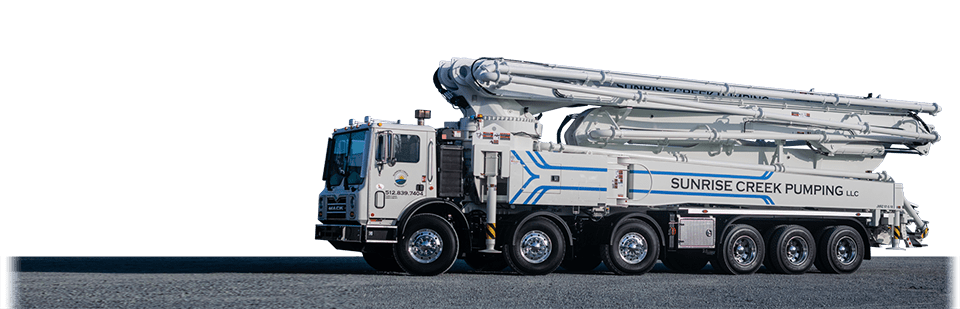

Finding a $131 million project is a major win for any company. Finding it in just two weeks is a game-changer. That’s exactly what happened for Sunrise Creek Pumping, a concrete pumping specialist based in Georgetown, Texas. This wasn't a stroke of luck or a one-off tip from an insider. It was the direct result of shifting from traditional lead generation to a data-driven strategy that gave them early visibility into the private construction market. Their story is a powerful example of how leveraging the right information can turn vague industry talk into qualified, high-value opportunities, empowering your sales team to act with precision and confidence.
Overview
Within two weeks of using Mercator.ai, Sunrise Creek Pumping LLC identified a major $131 million education project opportunity: an early-stage lead the team had “heard about” but couldn’t previously locate or qualify.
The platform revealed the project’s name, location, and permitting activity, turning guesswork into a clear, actionable opportunity for the sales team.
“We actually already knew about the job, but we didn’t know the name of the job or where it was located. After we identified the project, I printed out all these leads and gave them to a salesman and he went out there and said, ‘Man, we’ve got the job. But if I didn’t have this, I wouldn’t have even known it was there.’”
— Justin Humphries, Sunrise Creek Pumping
About Sunrise Creek Pumping
Sunrise Creek Pumping provides premium concrete pumping equipment and reliable field service to contractors across education, infrastructure, and federal projects in Texas. Known for responsiveness and professionalism, the team is trusted by general contractors who demand precision, speed, and dependability on every pour.
Services and Service Area
Based in Georgetown, Texas, Sunrise Creek Pumping, LLC provides essential concrete pumping services for contractors across the state. The team specializes in delivering premium equipment and reliable field service to complex education, infrastructure, and federal projects. Their focus on dependability makes them a trusted partner for general contractors who need precision and efficiency on every job. Their story is just one example of how industry leaders are leveraging new tools to find and win more work, which you can explore in other customer stories.
Contact Information
You can get in touch with the Sunrise Creek Pumping team directly using the information below.
Location: 2500 SE Inner Loop, Georgetown, TX 78626
Phone: (512) 942-9222
Sunrise Creek Pumping: Operations and Safety Record
When you’re vetting a new partner for a major project, you need to know they have the operational capacity and professional discipline to deliver. A look at Sunrise Creek Pumping’s public operational and safety data reveals a company built on a solid foundation of compliance, safety, and scale. This isn’t just about having the right equipment; it’s about running a tight ship, which is crucial for keeping complex projects on schedule and maintaining a safe job site for everyone involved. For general contractors, this kind of due diligence is essential for mitigating risk and ensuring a project runs smoothly from start to finish.
Fleet and Federal Operating Authority
A company’s official standing and the size of its fleet are key indicators of its ability to handle significant projects. For a concrete pumping specialist like Sunrise Creek, having the right federal authority and a large, well-managed fleet is the bedrock of their service promise. It’s what allows them to confidently take on the large-scale education and infrastructure jobs they’re known for across Texas. This assures clients that they have both the resources and the legitimacy to perform at the highest level, making them a reliable choice for any demanding construction project.
USDOT Information
Sunrise Creek Pumping LLC is an active carrier with a valid USDOT number, which you can review in their official company snapshot on the SAFER Web. This registration provides them with federal operating authority for intrastate hauling of private property. In practical terms, this means they are fully licensed to transport construction materials for the major projects they support. For general contractors, this level of compliance is a fundamental requirement when selecting partners for a job site, ensuring everything is above board and professionally managed from day one.
Fleet Size and Mileage
With a fleet of 97 power units, Sunrise Creek has the capacity to manage multiple large-scale projects simultaneously without compromising service. The team reported driving approximately 230,000 miles in 2023 alone, a figure that speaks to their extensive activity and reach across the state. For a general contractor, this scale provides peace of mind. It confirms that Sunrise Creek has the equipment and logistical expertise to deliver on time, every time, no matter the project's location or complexity, removing a significant variable from the project management equation.
Inspection and Crash History
Beyond fleet size, a company's safety and inspection history offers deep insight into its operational discipline and company culture. A strong safety record is about more than just preventing accidents; it’s about actively minimizing risk, avoiding costly delays, and upholding a professional standard on site. Sunrise Creek's public records highlight a clear and consistent commitment to safety, a non-negotiable trait for any partner on a successful construction project. This data provides a transparent look at how they prioritize the well-being of their team and the integrity of the job sites they work on.
Vehicle and Driver Safety Ratings
According to their FMCSA safety records, Sunrise Creek’s vehicle out-of-service rate is 16.7%, which is notably better than the national average of 22.26%. What’s even more impressive is their driver out-of-service rate: a perfect 0%. When compared to the national average of 6.67%, this demonstrates an exceptional focus on driver compliance and professionalism. For GCs, these numbers translate directly to reliability and fewer potential disruptions on the job, as you can trust their team will arrive prepared and compliant.
Accident Record
Over the last 24 months, Sunrise Creek Pumping has reported only two crashes, neither of which resulted in fatalities or injuries. Both incidents were classified as tow-aways. While the aim is always zero accidents, this record is strong, especially considering the company's extensive mileage and large fleet. It points to effective risk management strategies and robust safety protocols in place across their operations. This reinforces their reputation as a dependable and safety-first partner for high-stakes construction work, giving project managers confidence in their choice.
Understanding Concrete Pumping Costs and Benefits
For general contractors, bringing on the right subcontractor at the right time is key to keeping a project on schedule and within budget. When it comes to concrete, a specialized pumping service can be a game-changer. But what does it really cost, and what are the benefits? Understanding the value and pricing structures helps you make informed decisions when hiring partners like Sunrise Creek Pumping. It’s about more than just moving concrete from point A to point B; it’s about efficiency, precision, and the overall quality of the final structure. Let's look at the factors that influence the cost and why it's often a worthwhile investment for your project.
Why Use a Concrete Pump?
So, why not just use wheelbarrows or direct pouring from the truck? For many modern construction projects, those methods are simply too slow, labor-intensive, or impractical. A concrete pump offers a massive leap in efficiency. It allows you to place concrete exactly where you need it, much faster than traditional methods. This is especially critical for large foundations, elevated slabs, or hard-to-reach areas. According to industry experts at Angi, this precision placement not only saves time but also reduces labor costs and minimizes waste. For a GC, this means a cleaner job site, a tighter schedule, and a smoother workflow for all the trades that follow the concrete pour.
Typical Project Costs
Budgeting for a concrete pump requires understanding the typical costs involved. While every project is unique, we can look at some general figures to get a baseline. For smaller, residential-scale jobs, the cost for concrete pumping usually falls somewhere between $800 and $1,800, with an average around $1,200. Of course, commercial projects like the ones Sunrise Creek Pumping specializes in can have different demands based on their scale and complexity. These numbers are a helpful starting point, but the final price will depend on factors like the type of pump needed, the volume of concrete, and the duration of the pour. The best approach is always to get a detailed quote from a trusted pumping service early in your planning phase.
Common Pricing Structures
Most concrete pumping services charge by the hour, with rates typically ranging from $150 to $250 per hour. It’s also standard practice for companies to have a minimum charge for their services, often equivalent to about four hours of work. This minimum ensures that it’s worthwhile for the company to mobilize their heavy equipment and skilled operators for a job. When you're planning your budget, be sure to ask potential partners about their hourly rates and any minimums so you can avoid surprises and create a more accurate project forecast. This transparency is a hallmark of a reliable subcontractor.
Cost by Pump Type
The specific equipment your project requires will be one of the biggest factors in determining the cost. Different pumps are designed for different applications, and their rates reflect their capabilities. Here’s a general breakdown:
- Line Pump: Ideal for smaller jobs like patios or residential foundations, these typically run from $150–$200 per hour, with a $400–$600 minimum.
- Boom Pump: These are the large trucks with articulating arms needed for big commercial projects or reaching over obstacles. Expect to pay $200–$250 per hour, with an $800–$1,000 minimum.
- Specialty Pumps: For unique or highly complex jobs, specialized equipment might be necessary, costing upwards of $250–$300 per hour with a minimum of $1,000 or more.
Cost by Project Size
Beyond the hourly rate, the total volume of concrete you need to place will also influence the overall cost. As the volume increases, the price per cubic yard often decreases, rewarding efficiency on larger pours. Here’s a look at how total costs can scale with project size:
- Small Projects (1–5 cubic yards): Total costs typically range from $400–$800.
- Medium Projects (6–15 cubic yards): Expect a total cost between $800–$1,500.
- Large Projects (16–30 cubic yards): These jobs usually fall in the $1,500–$2,500 range.
- Major Pours (31+ cubic yards): For very large-scale projects, costs can start at $2,500 and go up from there.
The Challenge
- Sunrise Creek needed earlier visibility into upcoming commercial and institutional projects.
- Prior sources surfaced too many off-target or completed jobs
- Lacked a centralized way to connect project value, stage, and location to guide business development.
The Solution
- Generated ~30 new leads within the first week using Mercator.ai’s project search.
- Applied filters for project value ($1M+) and refined searches to exclude irrelevant or outdated opportunities.
- Used Mercator.ai’s document timeline to assess project stage and activity level, distinguishing viable upcoming jobs from completed ones.
- Shared qualified opportunities with the sales team for fast field follow-up.
One of these searches uncovered a $131 million education project where the concrete scope was estimated near 10% of total value. Sunrise Creek Pumping is now tracking the project and preparing to engage at the right stage.
Using Data to Vet Potential Partners
We’ve all heard whispers of a big project breaking ground soon, but turning that market chatter into a real opportunity can feel like chasing a ghost. Without concrete details, your team can waste valuable time and resources pursuing leads that are either off-target or have already been completed. This is where guesswork costs you. For Sunrise Creek Pumping, a vague tip about a job transformed into a tangible $131 million project lead once they had the right data. They went from hearing about a project to knowing its name, location, and permitting status, giving them a clear path to engagement.
Using a data-driven approach allows you to vet potential projects and partners with confidence. Instead of relying on rumors, you can analyze real-time information to see if an opportunity aligns with your business goals. By applying filters for project value and tracking a project’s document timeline, you can quickly distinguish viable upcoming jobs from dead ends. This strategy gives you the upstream visibility needed to build relationships early and effectively. Seeing how companies like Sunrise Creek Pumping found success shows that having the right information doesn’t just find you leads—it qualifies them for you.
Why It Matters
Mercator.ai gives its partners like Sunrise Creek Pumping a first-mover advantage: uncovering early signals in the construction cycle long before traditional bid platforms.
With Mercator.ai, Sunrise Creek Pumping can:
- Find high-value projects early in the planning and permitting process.
- Eliminate noise from irrelevant or outdated leads.
- Empower sales teams with verified, actionable intelligence.
By connecting fragmented public data into one platform, Mercator.ai enables Sunrise Creek Pumping to move faster, target smarter, and pursue opportunities with greater confidence.
Frequently Asked Questions
How exactly does a platform turn a rumor about a project into a real lead? It works by connecting scattered pieces of public information into a single, clear picture. That vague industry talk about a new development becomes a concrete opportunity when you can link it to a specific property transfer, a rezoning application, or an early permit filing. This process gives you the project's actual name, address, and owner, turning guesswork into an actionable starting point for your sales team.
Why is it so critical to find projects before they hit the public bid stage? Getting involved early is all about building relationships. When you identify a project during its initial planning phases, you have the chance to connect with owners, developers, and architects before key decisions are made and before your competitors are even aware of the job. This allows you to position your company as a valuable partner from the start, rather than just another name on a long list of bidders later on.
Besides a project's name and location, what other details help qualify an opportunity? To truly know if a project is right for your business, you need to see the bigger picture. Key details like the estimated project value, the names of the owners and design firms already involved, and a timeline of recent permit activity are essential. This information helps you quickly assess if the project's scale and timing align with your goals, so you can focus your resources on the opportunities that matter most.
My current lead sources are full of noise. How can I be sure a project is still active? The best way to cut through the noise is to focus on recent, official activity. A project lead is only valuable if it's moving forward. By looking at a timeline of official documents, such as recently submitted plans or newly approved permits, you can confirm a project is active and progressing. This prevents your team from wasting time chasing down opportunities that have already been completed or stalled indefinitely.
This story focuses on a concrete specialist. Can this approach work for other trades or general contractors? Absolutely. The principle of using early data to find opportunities applies to everyone in the construction ecosystem. Whether you're a general contractor looking for the next major development, a supplier trying to get your products specified, or any type of subcontractor, the core advantage is the same. Identifying a project at its inception gives you the first-mover advantage needed to build relationships and win more work.
Key Takeaways
- Get Ahead of Competitors with Early Project Data: Stop wasting time on vague industry rumors. Using real-time data on permits and planning activity allows you to identify and qualify high-value projects months before they hit public bid boards, giving you a critical first-mover advantage.
- Look Beyond the Bid to Mitigate Risk: A low price doesn't guarantee a successful project. Vetting potential partners by reviewing their public safety records, fleet size, and federal operating authority gives you a clear, unbiased view of their reliability and helps you avoid costly on-site issues.
- Make Smarter Subcontractor Selections: To keep your project on time and on budget, you need to understand the true value of specialized services. Knowing the typical costs, pricing structures, and efficiency gains of trades like concrete pumping helps you accurately forecast expenses and hire the right team for the job.
Related Articles



AI-powered business development for the construction industry
Schedule a time to discuss your use case and walk through a custom demo of the platform.